Engineering evidence sufficiency
Executable mechanics examples that test whether a check can establish the claim being made.
Analytical development example
Admitted four development reference problems covering axial response, bending, thick-cylinder elasticity and steady conduction. A separate 878-variant sweep exposed coarse-grid cylinder errors and quantified conditional fault-detection boundaries.
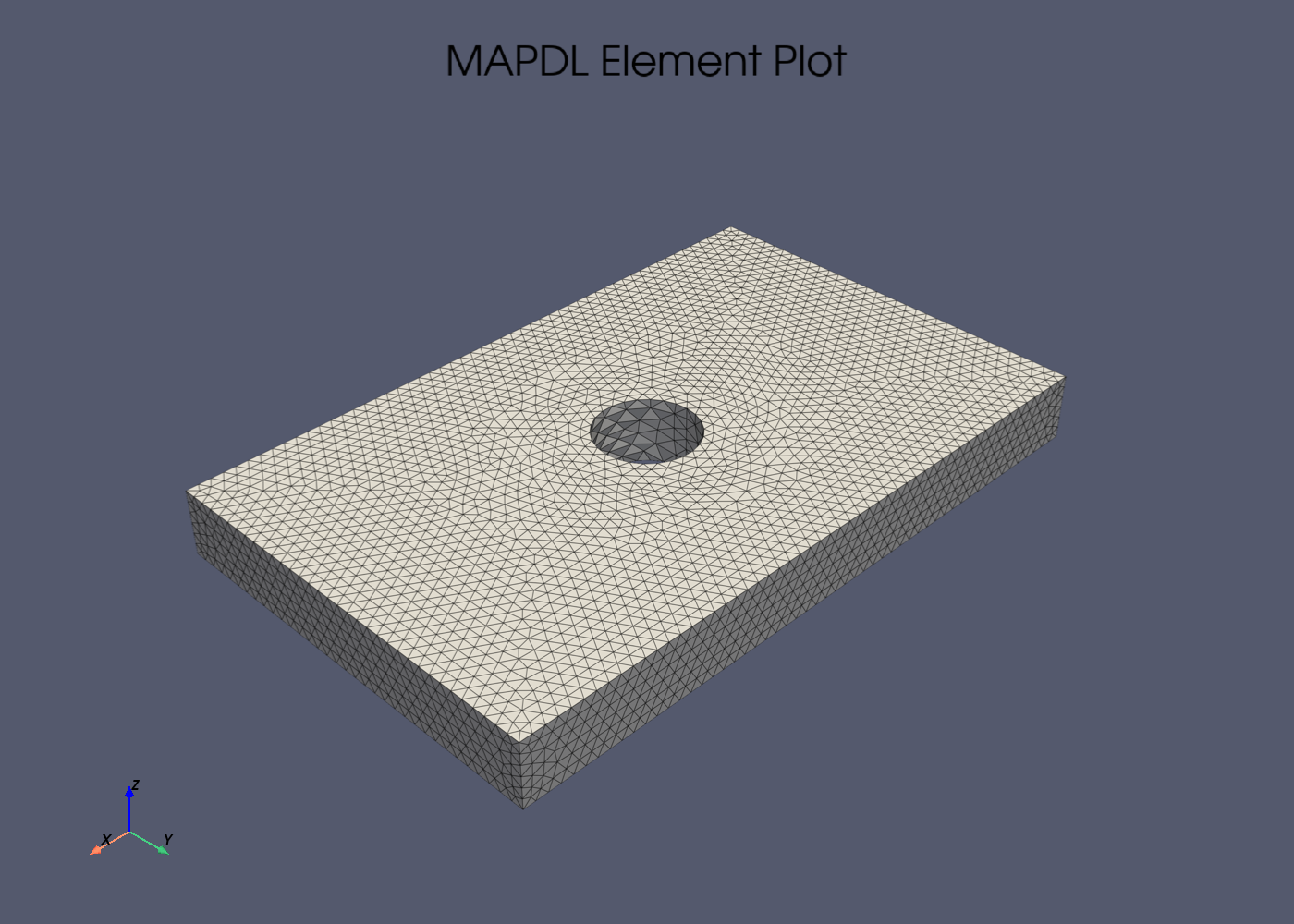
results and contributions
| Admitted reference problems | 4 scoped development problems |
|---|---|
| Development parameter variants | 878 |
| Coarse-grid cylinder gate failures | 96 retained, then investigated at finer resolution |
| Claim-specific example | Stress evidence can leave deflection ambiguous |
figures and hardware
Open any image at full size. Source links identify the retained revision.
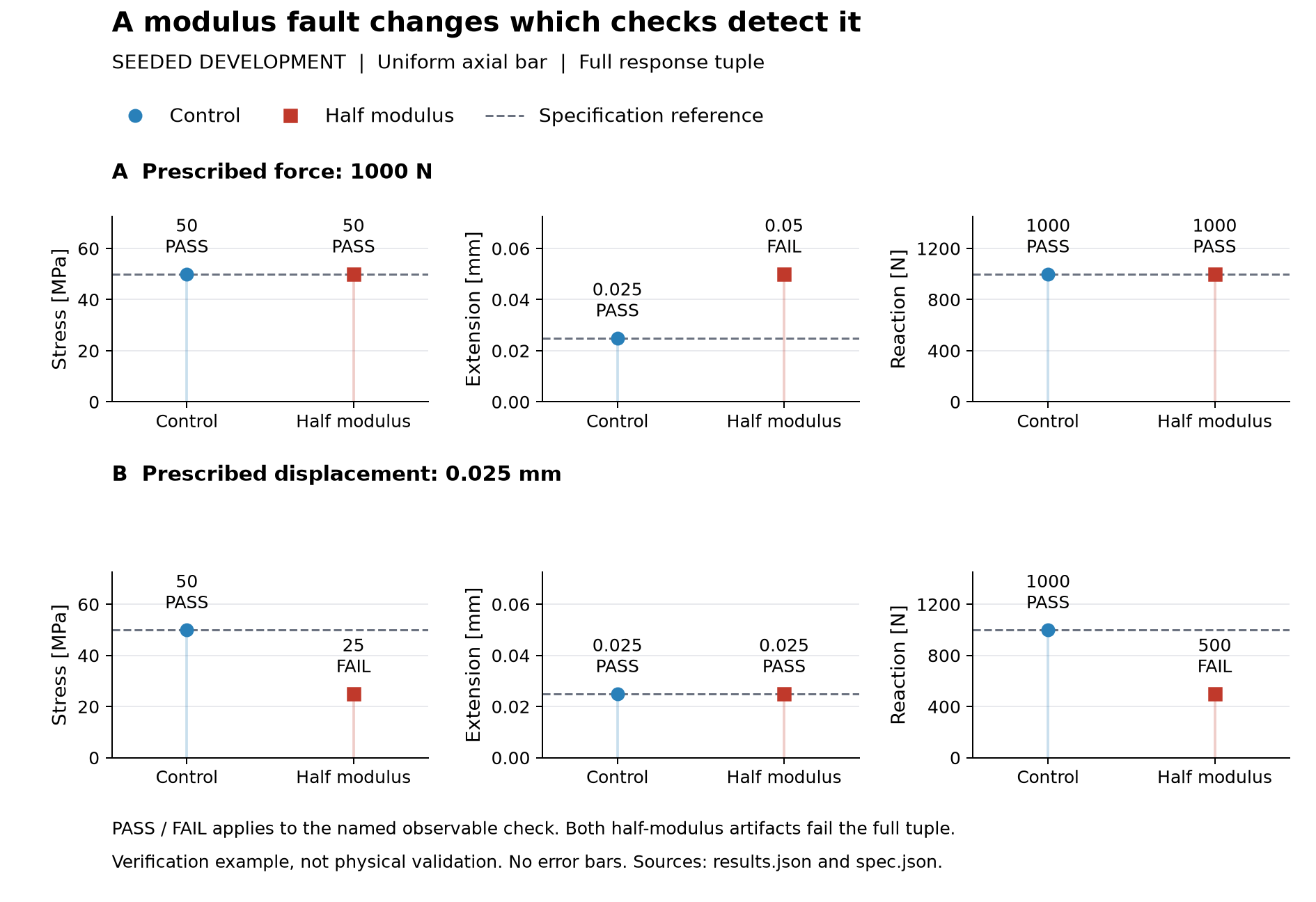
design evolution
The design and analysis steps that produced the current work.
| Work | Engineering question | Approach | Outcome |
|---|---|---|---|
| Calculation checker | Matching case annotations did not establish evidence sufficiency. | Make the claim and alternative explanations explicit. | Added explicit claims and alternative explanations to the case representation. |
| CAD and FEA | Solver completion and stress agreement did not establish mesh convergence. | Separate those outcomes in the evidence record. | Recorded the mesh sweep and distinguished stress agreement from the unmet convergence criterion. |
methods and scope
These are numerical verification problems. Admission used the adopted non-blind Claude AI technical review protocol; it is not human peer review or physical validation. VM25 supplies one firm published-reference problem. VM92 is admitted as derived, with its disputed printed target excluded. The benchmark has no frozen cross-family labels or scored reviewer pilot.
project record
| Evidence | Analytical development example |
|---|---|
| Status | In Progress |
| Timeline | 2026 |
| Role | Claim schema, analytical examples and independent cross-checks |
| Tools | Python, Analytical mechanics, Finite-element checks |