Soft-actuator recalibration
Synthetic pneumatic traces and a matched-cost comparison of recalibration policies.
Closed simulation study
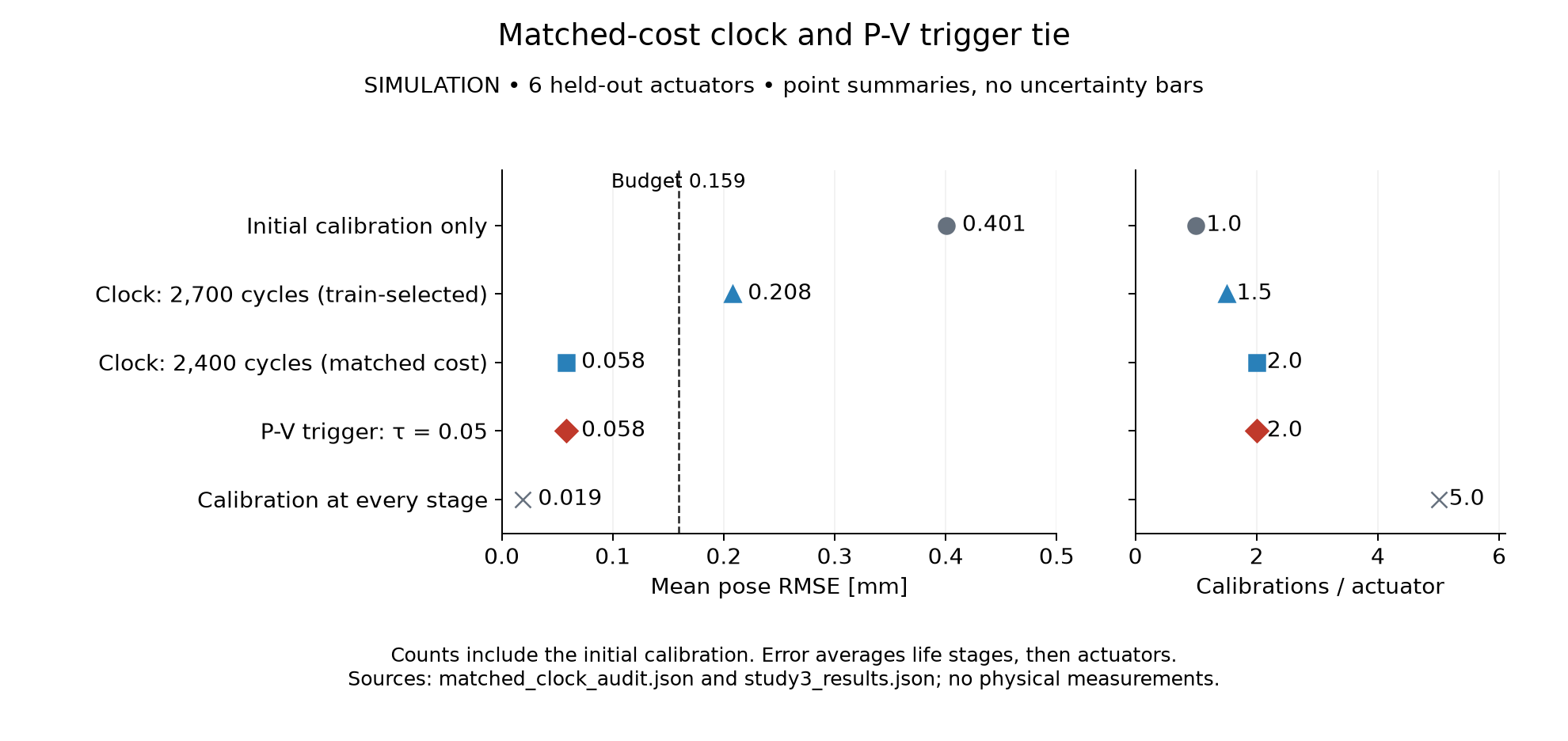
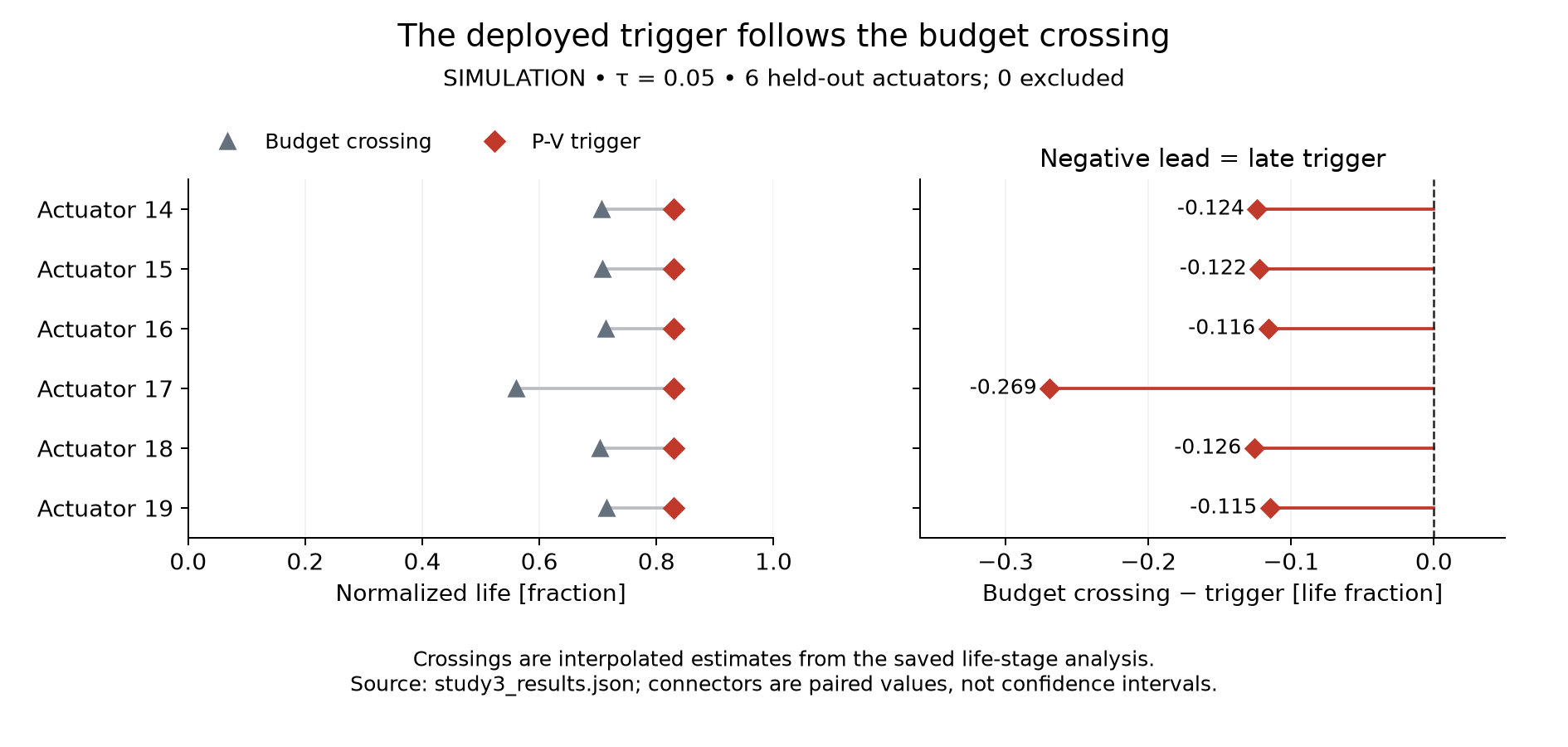
At matched recalibration cost, cycle count reproduced the P-V trigger’s performance across all 20 simulated actuators. The comparison established the simpler baseline’s effectiveness in this model.
results and contributions
| Simulated actuators | 20 |
|---|---|
| Policies compared | P-V trigger and cycle-count clock |
| Matched-cost result | Equal performance across all 20 actuators |
figures and hardware
Open any image at full size. Source links identify the retained revision.
design evolution
The design and analysis steps that produced the current work.
| Work | Engineering question | Approach | Outcome |
|---|---|---|---|
| Initial comparison | Unequal recalibration schedules favored the P-V trigger. | Compare policies at matched recalibration cost. | The cycle-count clock matches the P-V trigger across all 20 simulated actuators. |
| Withdrawal | The simulation did not support the proposed advantage. | Closed v1.4 and preserved the reproducible comparison and correction. | Code, figures and the corrected comparison are preserved with the withdrawal record. |
methods and scope
This completed study uses synthetic actuator traces. The v1.4 manuscript was withdrawn before release after the matched-cost comparison; its earlier advantage was not supported. The results describe recalibration in the model, rather than physical lifetime or failure warning.
project record
| Evidence | Closed simulation study |
|---|---|
| Status | Complete |
| Timeline | May–October 2026; closed |
| Role | Simulation, matched-cost baseline audit and withdrawal record |
| Tools | Python, NumPy, SciPy, Matplotlib |