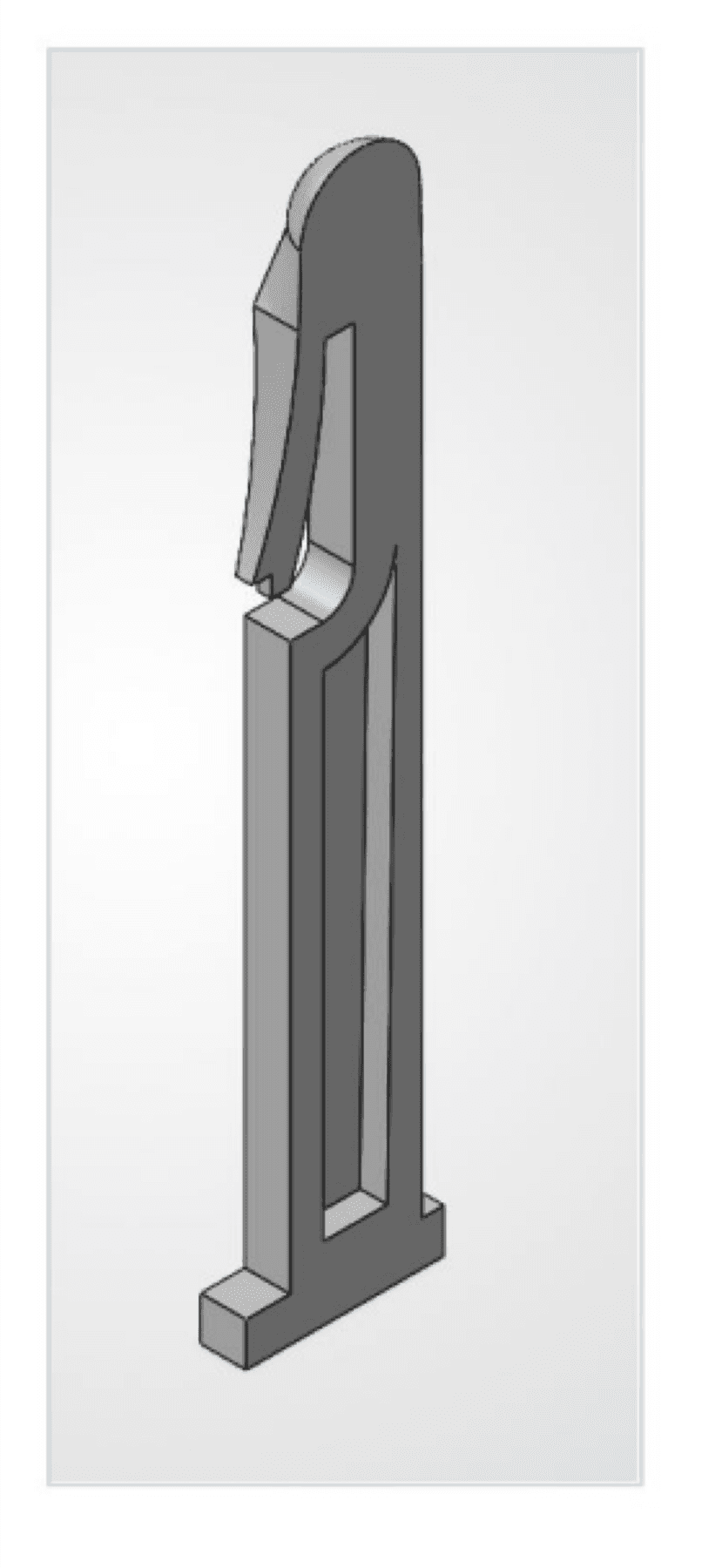
V-Aid Climbing Tactile Pin Array
Assistive climbing-wall interface that converts route-image information into a physical tactile pin array.
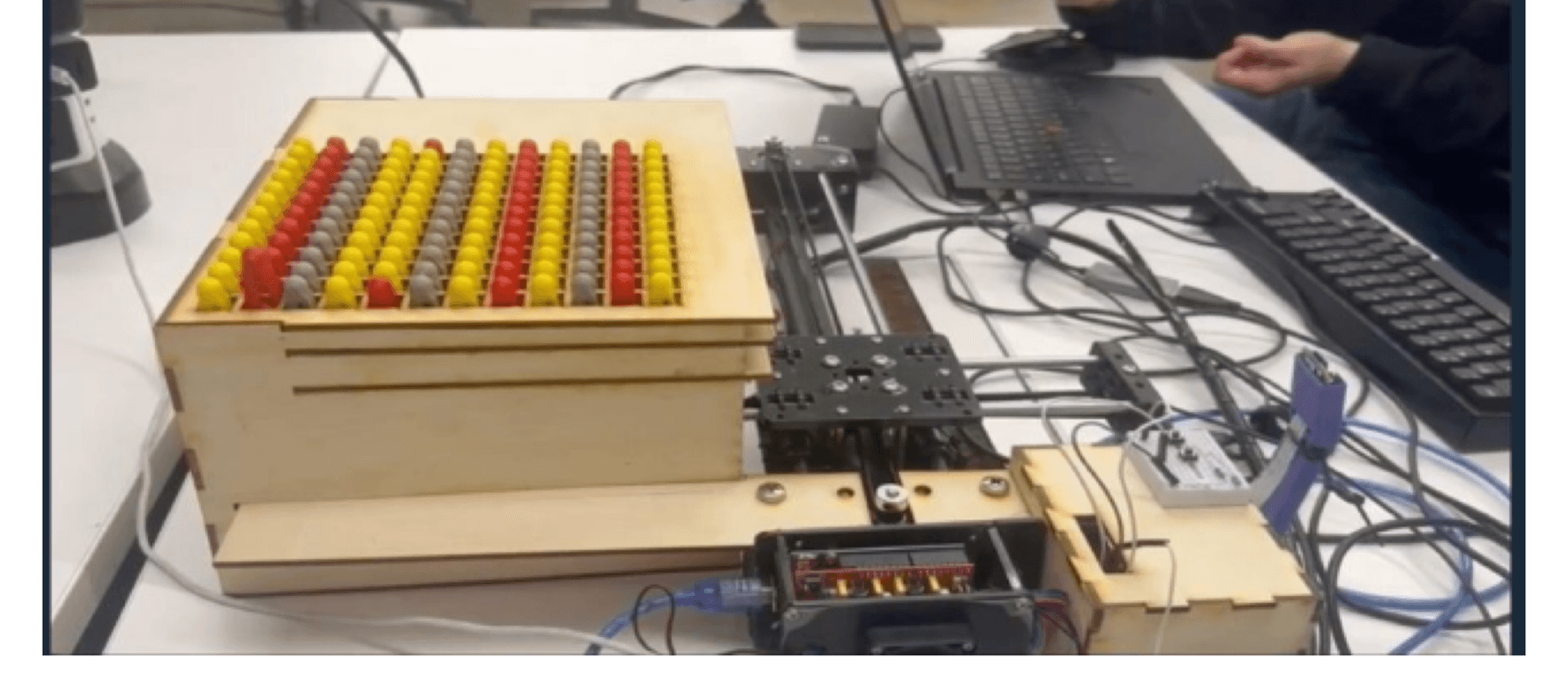
Result. Reduced roughly 60% early pin-rise failure to smooth locking across 14 route patterns by iterating pin mass, guide geometry, and clamp behavior through four prototypes.
The demonstrator turns a route image into raised pins so a blind climber can preview the wall before climbing. Four printed generations were tested against real route patterns; the evidence is functional prototype testing, not durability qualification.
| Category | Assistive Robotics / Mechanism Design |
|---|---|
| Timeline | Jan. 2025 - Apr. 2025 |
| Status | Functional Prototype / Showcased Prototype |
| Evidence | Physical functional testing |
| Role | Mechanical design, pin geometry iteration, guide-feature design, clamp-interface design, FDM prototype fabrication, laser-cut housing fabrication, mechanical integration, and prototype testing |
| Tools | SolidWorks, Bambu Studio, Ultimaker Cura, Epilog Laser Cutter, Arduino |
| Materials | PLA, laser-cut birch plywood, servo hardware, guide hardware, fasteners |
problem
My contribution. Pin CAD, guide-feature and clamp-interface iteration, FDM prototype fabrication, laser-cut housing integration, and functional route testing.
The mechanical challenge was repeatable pin motion, not strength. Each pin had to rise without binding in the guide plate, lock in the raised position, and stay readable by touch inside a compact tabletop unit driven by one SG90 servo.
constraints
- Display a 12 x 12 array of FDM-printed PLA pins in a compact tabletop demonstrator.
- Work within an SG90 micro servo at 5 V, roughly 3 N at a 2 in arm.
- Rise and lock without binding in the guide holes.
- Stay readable by touch without sharp edges.
design evolution
Iterations, issues, and fixes, recorded in the order they happened.
| Revision | Failure mode | Design change | Result |
|---|---|---|---|
| Pin geometry | Tall, solid pins bound in the guide holes and exceeded the servo's lift force. | Shortened the pin and hollowed the PLA body. | Lower actuation effort with the return behavior preserved. |
| Guide and clamp | Pins tilted or failed to lock in the raised position. | Iterated the guide features and side-holder geometry together. | Stable raised position across the array. |
| Integrated demonstrator | Pin tops read poorly and the subassemblies were not yet one unit. | Rounded the tactile tops and combined the laser-cut housing, pin grid, actuator path, and electronics. | Smooth locking across 14 tested route patterns. |
results
Testing was functional: 14 climbing-route images, each actuating roughly 20 to 40 pins, run on each prototype generation. Early designs failed on about 60% of pin rises from binding and pin geometry.
After revising pin mass, guide behavior, holder geometry, and base contact, the final generation locked smoothly on every tested route. The work was supported by a $2,000 NYU Prototyping Fund award.
Scope note. This was functional prototype testing, not a fixed-cycle durability qualification.
lessons
- The primary failure mode was friction and guide-hole binding, not pin fracture.
- The strongest improvement came from changing the pin, guide, and clamp geometry together rather than as separate parts.
- Next tests should be a 100-200 cycle actuation run, a measured jam count, a guide-clearance study, and direct force measurement.
gallery